joinanees5@gmail.com
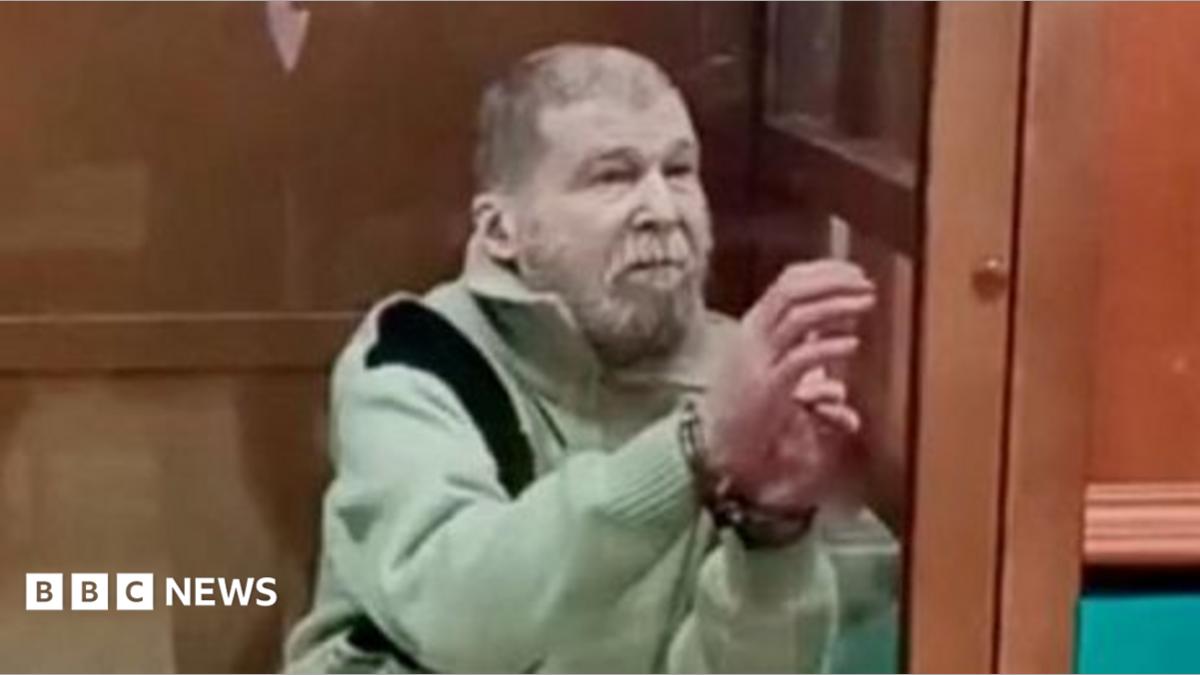
Khyliuk, a journalist, was held in the earliest days of the invasion, when Russian troops advanced towards the capital Kyiv.
He said he knew Hubbard’s health was declining over the months they were initially held in nearby cells because he heard his complaints and the guards calling him more often to see the prison doctor.
Khyliuk described broken windows and biting cold, with detainees using time out of their cells to huddle together in the bathroom for warmth.
“It was very difficult conditions in Novozybkov, worse than in the next prison. It was very cold there in winter, terribly cold,” he said.
Both men encountered the retired English teacher again at their next prison, Pakino, where Shyshko says Hubbard’s condition worsened.
“There was not a single spot on his knees or on his feet without rot,” he said.
“Everything was rotten. We all had scabies. It was very, very difficult for him. I even bandaged him once at the medical centre, because the doctor didn’t want to do it. He just couldn’t do it himself, and I had to help. He was quite weak then and he almost couldn’t move.”
They detailed a harsh regime and a meagre diet of porridge, bread and potatoes, with a daily routine of beatings and humiliation, being forced to run or hold stress positions.
“There’s a handler with a dog, who lets go so it can bite you on the buttocks, on the elbow, or bite your leg. Then these wounds fester very badly,” Shyshko said.
Khyliuk claimed that soon after their transfer to Pakino, Hubbard was hidden to conceal his condition from a team of International Red Cross visitors.
“I would like to say that an international humanitarian organisation that receives a lot of funding could do better. They saw only what was shown to them and they were happy with that,” he said.
The International Committee of the Red Cross said in a statement that “in any situation where the ICRC has been granted access, we request to see every individual and assess the conditions they are held in. We continue our discussions with parties to the conflict on this issue.”
Khyliuk said Hubbard disappeared from the prison in 2024 and he thought he must have been released. Khyliuk was returned to Ukraine in August 2025 in a prisoner exchange.
He likened their treatment to the regime of Soviet leader Joseph Stalin.
“Russian captivity is a torture machine. From the first second of your detention, they do everything to suppress you, to intimidate you. This is torture in all its manifestations, from psychological to physical. Beatings, hunger, cold, lack of any information, lack of the opportunity to communicate even with other prisoners”.
Khyliuk said he was pleased to see Hubbard finally released and heading to the US.
“I understand what it is like to be in terrible captivity. Moreover, it was not his war. He ended up in the wrong place and at the wrong time,” he said.
But he described the timing as “shameful PR of the US president, who is losing votes in elections to Congress”.
Shyshko said he hoped one day their torturers would face justice.
“Evil must be punished, and so it will be. I have hope for that”.