joinanees5@gmail.com
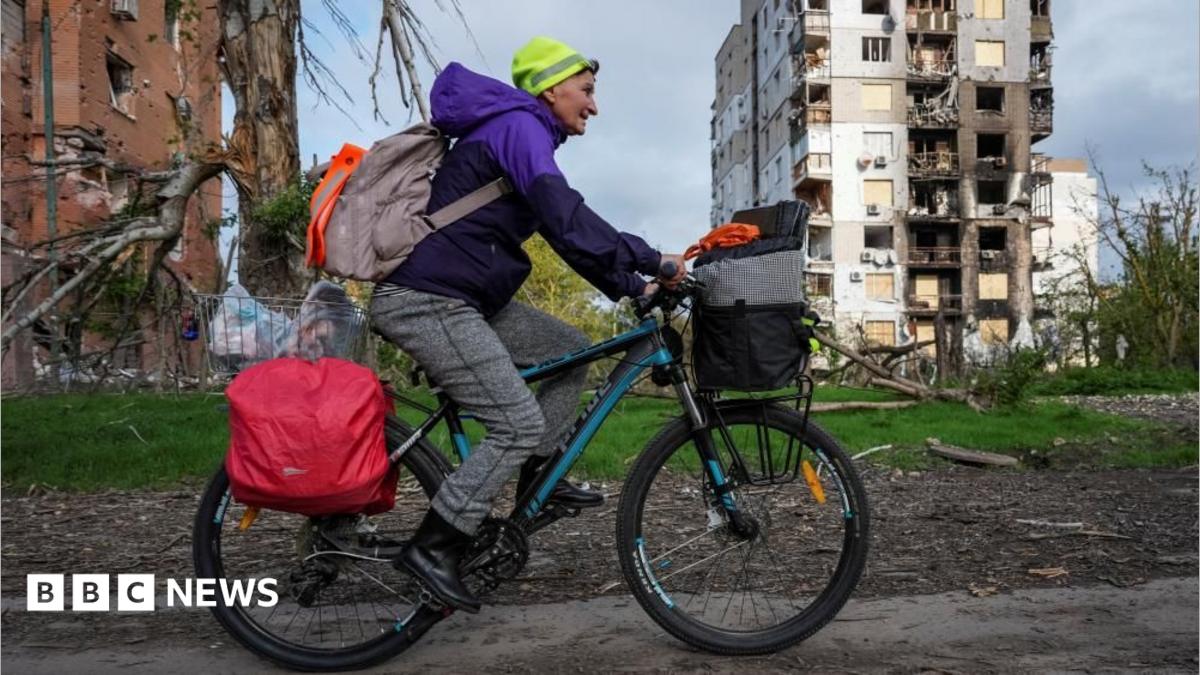
This week, dozens of people were also able to access their belongings and homes in the so-called “red zone” of Kherson – an area so exposed to drones and artillery attacks that it has become unlivable.
“Some are venturing into places where nobody has dared to go for years, filming areas where simply being present has meant – and will once again mean – almost certain death,” said Denisa Bohackova, a Czech volunteer who lives in Kherson.
Dima described scenes of “girls, boys, parents, grandmothers” walking down the streets of the red zone carrying suitcases and bags, returning to their flats to see what they could retrieve.
Some of those who returned to the red zone found buildings reduced to charred, empty shells; in other cases, homes had been looted. The scale of destruction in some of these places, Bohackova said, is “breathtaking”.
Others were rushing back for reasons beyond material concerns. Angela Dobrovolska’s husband Serhiy was killed two years ago by a grenade dropped by a piloted Russian drone – an instance of a “human safari” attack of the kind that Kherson has become sadly infamous for.
On Thursday, Angela headed back from Kyiv to Kherson to visit his grave for the first time in months. “They say that all the people have rushed to Kherson,” she said. “And I’ll be going to the cemetery to my husband.”
The population of Kherson has dwindled from over 250,000 to about 65,000 since the start of Russia’s full-scale invasion of Ukraine, which will enter its sixth year in February.
Though civilian life in the city never stopped, Bohackova said, it also carried on under the conditions of an active battlefield, with schools, theatres, kindergartens and hospitals moved underground.
“An ordinary civilian from Kherson has experienced more of this war than many soldiers,” Bohackova said.
Olga, who is raising two children, described regular blackouts, mines dropped by drones and concealed by fallen leaves, drone fragments ricocheting, and a city that typically shuts by the afternoon.
But since silence fell on the city, Olga has been able to live a normal life. She drove to a different town and took the bus to another district to visit her grandmother with her son. Around her, the shops were full, as were the cafes. After years of quiet streets, “there was even a small traffic jam,” she smiled.
But the clock is ticking.
The evacuation of nearby Oleshky is due to be completed by Sunday, after which the ceasefire will be over. “The concern is that, starting Monday, things could turn truly chaotic,” Olga said.
“We know the strikes will resume, and that they will increase,” said Dima, as he and his wife prepared to visit their flat in the red zone for the first time in several months.
“These few days showed us how it could be if it all finally ended.”