joinanees5@gmail.com
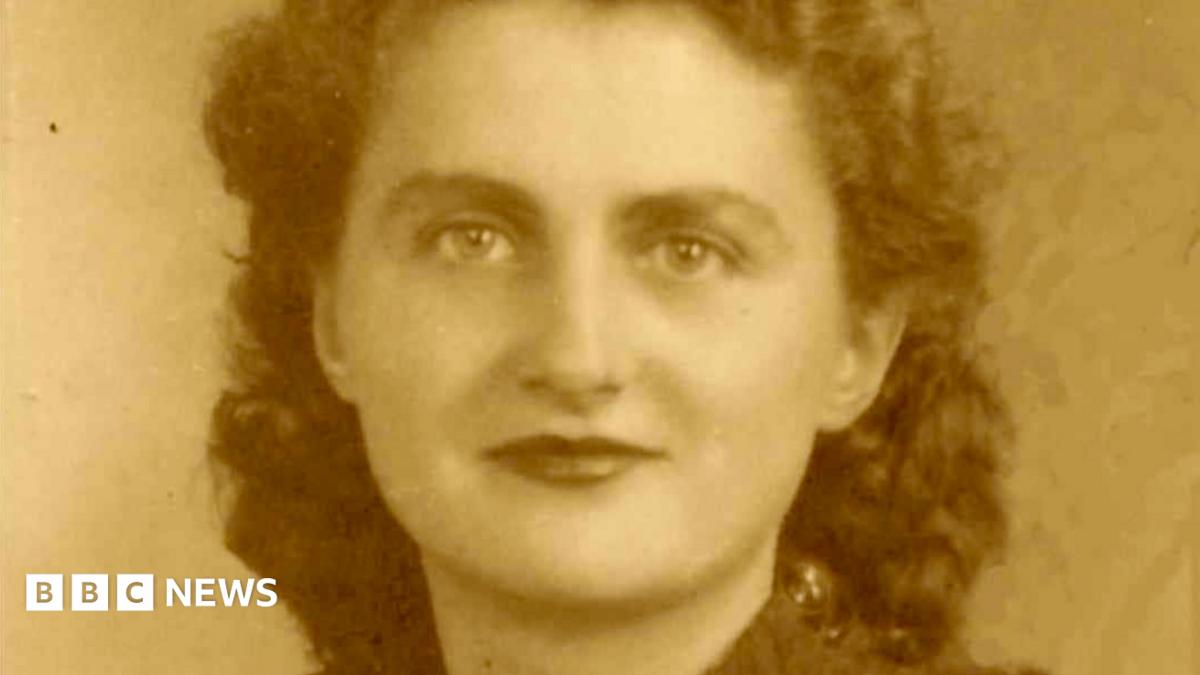
One of France’s last Resistance heroes from World War Two has died at the age of 104. Solange Alexandre was also a rare woman who, with her future husband, created and commanded her own unit of anti-German fighters.
After serving as a Resistance courier from 1941, three years later she founded the Pas-de-Boeuf network near the town of Ruillé-sur-Loir.
With some 30 men under her orders, she organised sabotage operations, sheltered Allied airmen and, after the Allied landings in Normandy on D-Day in 1944, joined the fight against the occupying German forces.
President Emmanuel Macron was among many to pay tribute to Alexandre, after her death was announced at a nursing home in Le Mans.
“She said she only ever did her duty. But her duty was our freedom. France will never forget. Thank you,” Macron posted on social media.
Born in 1922 in the Sarthe department of western France, Solange Alexandre, née Dubuisson, grew up in a patriotic family that had suffered in World War One.
“My mother lost her first husband in the war, and my father was wounded in 1917. The words homeland and honour were very important to us. They were in my blood,” she recalled in her memoirs.
In June 1940 she heard on the radio the appeal from General Charles de Gaulle in London, calling on the French not to give up the struggle against Germany. She had never heard of him, but that did not matter.
“From that moment I knew I had to join up,” she wrote.
Some months later she was recruited by a friend of her father’s – a Tunisian-born French army veteran called Saïd Belhaffaf, who had joined the Resistance.
Using the code-name Corlay, she criss-crossed the region around Le Mans by bicycle, gathering information and passing on messages.
“There were no mobile phones back then, and no private cars either because of the lack of petrol. The bicycle was king,” she said in an interview two years ago.
In 1943 she met her first husband Guy Déliot, who had deserted from the French gendarmerie after refusing to arrest some Jews.
The following April, with the Allied invasion approaching, they decided to take to the maquis, in other words live clandestinely in the forested hills, supplied with food by local farmers.
Their group consisted of deserters from German forced labour programmes, as well as survivors from another Resistance outfit that had been destroyed by the enemy. There were also two airmen, one American and one Canadian.
“Twice the Gestapo came for me, and twice I slipped through their hands,” she later recalled.
After taking part in the liberation of Tours in September 1944, she ended the war with the rank of sub-lieutenant in the French Interior Forces (FFI).
Later she worked as a teacher and followed her husband on his many postings as an officer of the gendarmerie in French overseas territories. He was killed in 1960 in Martinique, and in 1981 she remarried.
Twice Solange Alexandre turned down the Légion d’Honneur, saying that she had only done her duty and that others were more worthy.
Finally in 2024 she relented.
On receiving the award she said: “It is a great pleasure and a great honour. I am very proud – even if it is only a few weeks, or a few months, before I die.”