joinanees5@gmail.com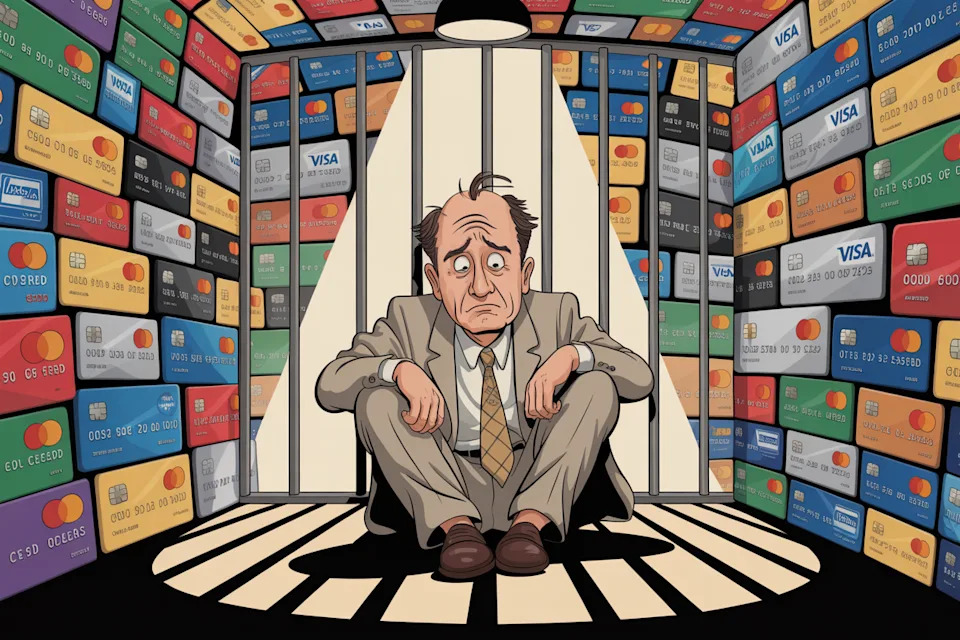
Remember when travel rewards programs actually rewarded you? You collected points, earned status, and got “free” flights.
So why does it all feel like a trap now?
Somewhere along the way, these schemes stopped rewarding loyalty and started exploiting it. Points quietly got devalued. Elite tiers required ever-higher spending thresholds. “Free” flights started coming with hundreds of dollars in taxes and fees.
And loyalty became a gilded cage.
Check out Elliott Confidential, the newsletter the travel industry doesn’t want you to read. Each issue is filled with breaking news, deep insights, and exclusive strategies for becoming a better traveler. But don’t tell anyone!
“The whole point of loyalty programs is to improve the customer experience, not restrict it,” said Mario Matulich, president of Customer Management Practice. “If your points don’t go as far, status gets harder to earn, or cashing in rewards feels like pulling teeth, then the program isn’t really delivering. When it gets to that point, rewards programs feel more like a burden than a reward.”
Millions of travelers now find themselves trapped in loyalty quicksand. The deeper you sink, the harder it becomes to escape. The programs that once felt like partnerships are now predatory relationships designed to extract maximum value while delivering minimum benefits.
Hidden fees and dirty cars spark a wave of ‘car rental rage’
The loyalty goalposts are moving
Consider what happened to Gerri Hether. The retired nurse from Mesa, Arizona, thought she’d mastered the loyalty game. After years of religiously charging everything to her hotel-branded credit card and staying faithful to one airline, she’d climbed the elite tiers and accumulated hundreds of thousands of points.
Then she tried to book her dream vacation to Hawaii.
“I needed 250,000 miles for a one-way first-class ticket from Phoenix to Maui,” Hether said. “Last time I used miles two years ago, it was 80,000 miles for a round-trip first-class ticket.”
Neither she nor her husband had enough points for even one ticket.
But Hether didn’t accept her situation. She decided to do something about the unfairness of the moving goalposts. In a minute, I’ll tell you how she fought back.

Sky Miles Prison
Why loyalty programs feel like prisons
Remember when frequent flyer programs rewarded, well, frequent flying? Not anymore. Most airlines now base rewards on dollars spent, not miles flown. Hotel chains silently reduce perks. Credit card companies raise annual fees while reducing benefits.
Recent data from Mews, a hospitality technology company, reveals that 82% of current hotel loyalty members cite frustrations with traditional programs. The top complaints:
-
Points expiring too quickly (28%)
-
Blackout dates limiting redemptions (24%)
-
Difficulty earning meaningful rewards (23%)
Pamela Wagner, who runs a global advertising agency and has visited over 100 countries, said she “had executive lounge access” during every hotel stay through the status provided by her credit card. “This has been removed silently over the last two years. No email, no communication. Just a ‘Sorry, that’s not available anymore’ at check-in.”
The cruel irony? While loyalty programs have become less generous to travelers, they’ve become gold mines for companies. Most airlines now earn more profit from their frequent flyer programs than from actually flying planes.
How to know if you’re caught in a loyalty trap
Before you can escape, you need to recognize you’re trapped. Here are the warning signs:
-
You’re chasing status instead of value. If you’re spending extra money just to maintain elite tiers, you’ve crossed from customer to captive. Financial advisor Winnie Sun tells clients to calculate their actual return annually. “One client was spending an extra $3,000 yearly on a specific airline just to maintain elite status that saved her maybe $800 in fees,” she said. “It wasn’t worth it.”
-
You’re making travel decisions based on points, not preferences. When your loyalty program dictates where you stay or which airline you fly — even when cheaper or better options exist — you’re no longer in control. Your loyalty program is.
-
Your “free” rewards come with expensive strings. Airlines love displaying “Free Ticket” in large fonts while burying fuel surcharges, booking fees, and taxes in fine print. Those extras can push your “free” flight to cost hundreds out-of-pocket. It is often less expensive to just book a regular ticket.
-
You’re hoarding points indefinitely. If you’re collecting points without specific redemption goals, you’re vulnerable to devaluations and rule changes. Points sitting unused are assets losing value.
As you read this list, you may be saying to yourself, “Surely he’s not talking about me!” But maybe I am. Rachel Acres, a substance abuse counselor, draws parallels between loyalty programs and addiction.
“In recovery, we learn that admitting you’ve wasted money on something that isn’t serving you anymore isn’t failure,” she said. “It’s wisdom.”
How smart travelers are approaching loyalty
Smart travelers are treating loyalty programs like any other vendor relationship. When the terms no longer work, they walk.
One of the strategies is the “portfolio” approach. Instead of putting all their eggs in one loyalty basket, savvy travelers are diversifying.
“The smartest approach I’ve seen is the ‘portfolio method’ — spread your spending across two to three programs instead of going all-in on one,” Sun said. “When Delta (Air Lines) devalued their program in 2023, my diversified clients barely noticed, while the loyal-to-one-brand travelers scrambled.”
There’s also the property-over-brand strategy. Andy Abramson, a longtime business traveler, advocates for what he calls property loyalty over brand loyalty: “A property that knows you, values you, and trusts you is far more likely to deliver meaningful benefits than a faceless brand that just wants to keep you spinning in its points hamster wheel,” he said.
Another popular approach is the cash-back rebellion. Some travelers are abandoning points entirely and moving to a card that offers a flat 2% cash back. The math — earning back money that equals or surpasses the card’s annual cost — often works out.
The most successful escapees treat their loyalty programs like insurance policies — reviewing them annually and dropping those that no longer deliver value.
What are the new rules of loyalty?
For travelers who aren’t ready to abandon loyalty programs entirely, here are the new rules for making them work on your terms:
-
Set spending caps. Experts say you shouldn’t spend more than $500 annually chasing status in any single program. If meaningful benefits require more investment, the math doesn’t work.
-
Focus on flexibility. Choose programs that offer multiple redemption options and partners. Flexibility protects against devaluations.
-
Earn and burn quickly. Set specific redemption goals and use points within 12 to 18 months. Don’t let them accumulate indefinitely.
-
Track real value. Calculate the actual dollar value you’re earning per dollar spent, not the inflated “point values” programs advertise.
“Treat points like a depreciating asset,” advised Jeff Galak, who teaches marketing at Carnegie Mellon University. “Just like your car loses value once you drive it off the lot, points lose value with time. In other words, consumers should not hoard points, but rather, should use them.”
Is this the future of travel loyalty?
The loyalty landscape is already shifting. Companies like Loya are emerging with instant cash-back models instead of deferred rewards. Hotels are focusing on personalization over points — recent data shows 68% of travelers now prioritize personalized experiences over accumulating points, with Gen Z leading at 83%.
“The era of transactional loyalty is over,” said Richard Valtr, founder of Mews. “Today’s travelers want genuine recognition — the kind that comes from truly understanding who your customer is.”
And how about Hether, the retired nurse from Arizona? After discovering her miles had been devalued, she didn’t just complain — she acted. “I canceled the (hotel) card when the annual fee hit $650 with fewer benefits.”
Hether went with a cash-back card that offered her more flexible redemption offers. She’s found freedom in flexibility. By abandoning her pursuit of elite status and focusing on value, she’s discovered she can travel more for less. Her former loyalty programs might not miss her, but she doesn’t miss them either.
And maybe that’s how to escape the loyalty quicksand. Because sometimes, the best loyalty program is no loyalty program at all.
Christopher Elliott is an author, consumer advocate, and journalist. He founded Elliott Advocacy, a nonprofit organization that helps solve consumer problems. He publishes Elliott Confidential, a travel newsletter, and the Elliott Report, a news site about customer service. If you need help with a consumer problem, you can reach him here or email him at chris@elliott.org.
This article originally appeared on USA TODAY: The loyalty trap: Why airline and hotel points feel useless