joinanees5@gmail.com
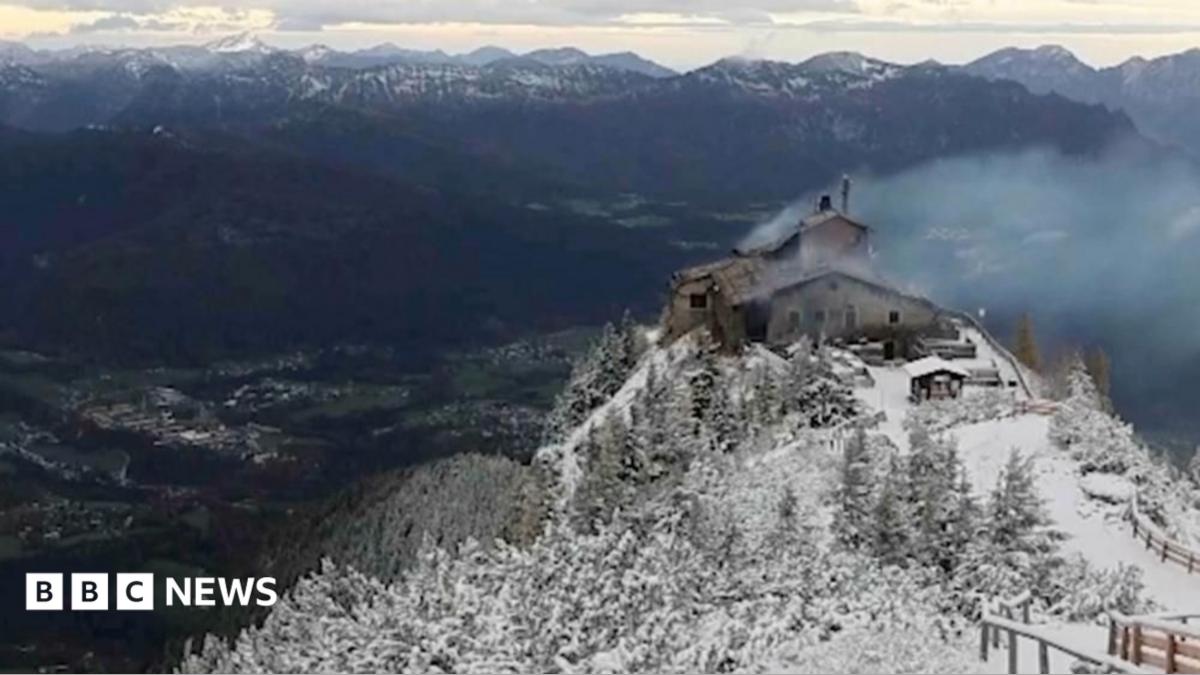
Herrmann said they would look for a sensible solution in consultation with historians, given the historically complex circumstances surrounding the building.
Heinemann, who also heads the Leibniz Institute for Contemporary History, believes full-scale reconstruction should be “out of the question”.
“I rather think we can document the state left by the fire and also document the historical remains of the Kehlsteinhaus, and then reconstruct parts in a modern design, to make clear the different layers of time that can be seen in this building,” she told the BBC.
Germany and Austria have long struggled to deal with the fraught legacy of buildings and sites connected to the Nazi era.
With the recent rise of the far-right AfD and the Austrian Freedom Party, the debate over Erinnerungskultur (Culture of Remembrance) has taken on a new urgency.
A row broke out recently in Germany when AfD and conservative CDU councillors in a town in Saxony decided to ban “stumbling stones” memorials – embedded small brass plaques in the streets – to victims of the Nazis.
In Austria over the summer, a police station was opened in the house where Hitler was born in Braunau am Inn. It followed years of controversy about how the house should be used.
The Austrian government said the police presence would help prevent neo-Nazi pilgrims.
But others had wanted the house to become a centre of responsibility, actively confronting the Nazi past.
As one resident of Braunau am Inn told me, it was a delicate balance between how much to remember and how much to forget.