joinanees5@gmail.com
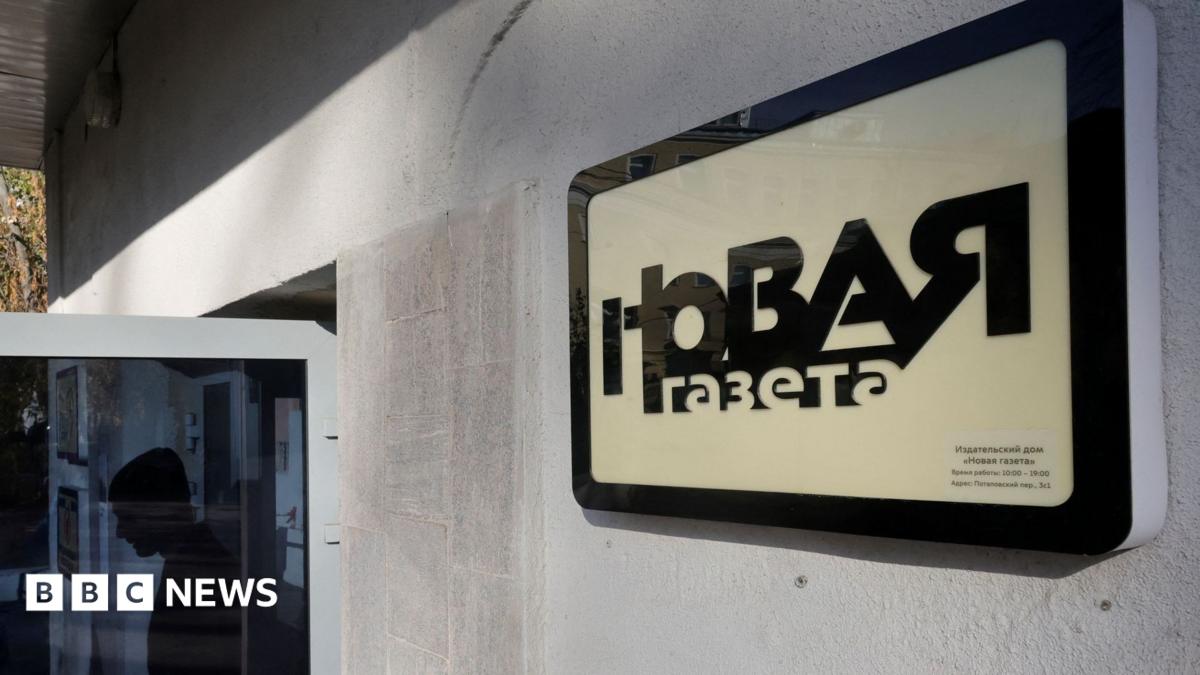
At the editorial offices of Novaya Gazeta, they are packing up and shutting down.
Everywhere I look there are cardboard boxes and plastic bags. Everything must go.
For thirty years this has been Russia’s most prominent independent newspaper, featuring investigative journalism fiercely critical of those in power.
Now Novaya Gazeta is being evicted from its home of three decades. The paper also says it’s been blocked from receiving donations.
It’s accusing the Russian authorities of killing it off.
“There are different ways to commit murder,” journalist and co-founder of the paper Dmitry Muratov tells me. “They chose to strangle us.”
“First, they blocked our websites and banned the paper edition. Then they revoked our media licence. One by one we were declared ‘foreign agents’, and our journalists were attacked.
“Now we can’t earn any more money. The banks are refusing to accept donations from our readers. In our country there are political repressions going on. Those have reached us.”
In 2021, Muratov was awarded the Nobel Peace Prize for efforts “to safeguard freedom of expression, a precondition for democracy and lasting peace”.
The award didn’t stop the Russian authorities from designating him a ‘foreign agent’ in 2023. The label is often used to punish critics of the government.
Over the years Novaya Gazeta had developed a reputation for fearless investigative reporting on subjects such as corruption, human rights violations and abuse of power by officials and bureaucrats – dangerous topics in Russia.
The paper says that six colleagues were killed for “fulfilling their professional and civic duty”. Those journalists include Anna Politkovskaya, who was shot dead in the stairwell of her apartment block twenty years ago this month. She had written extensively on the wars in Chechnya.
As I walk down a corridor, I spot the office Anna had used. Following her killing, the room and all the items in it were preserved and became a museum in her memory. Since the eviction order, most of the objects have already been removed. All that’s left is the desk and, lying on top, a portrait of Anna.