joinanees5@gmail.com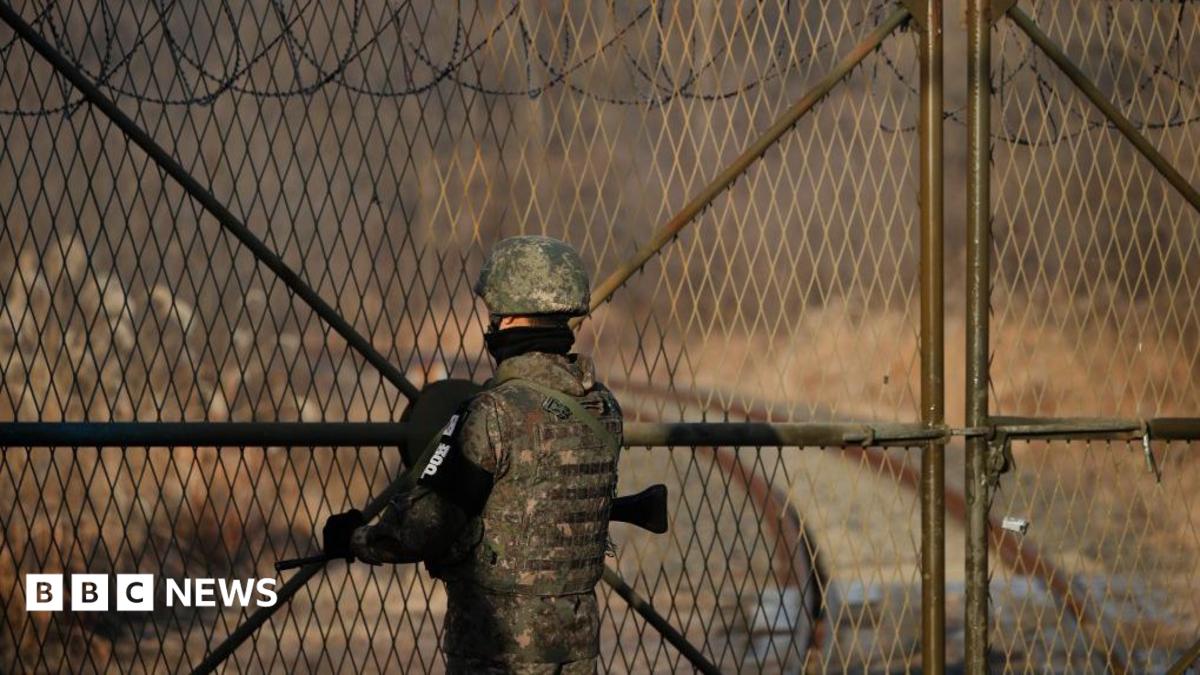
South Korea’s military has demanded an apology from North Korea for landmine blasts along their shared border that wounded South Korean soldiers earlier this month.
Three South Korean personnel were injured by explosions in the Demilitarised Zone (DMZ) – a buffer zone separating the two Koreas, on 21 September.
South Korea said on Tuesday that the blasts, which happened on South Korea’s side of the DMZ, were “highly likely” from North Korean mines. It vowed to take “corresponding measures” for what it said was a violation of a decades-old armistice.
North Korea has denied responsibility for the blasts, calling Seoul’s claims “groundless” and a “farce” to escalate tensions on the peninsula.
Kim Yo Jong, the powerful sister of North Korean leader Kim Jong Un, accused South Korea of “cooking up” the claims for “political and military provocation”.
Kim denied suggestions that North Korean had crossed the border to plant the mines, calling it “a deliberate and planned strained assertion to shift the responsibility for escalating tension” to North Korea.
Her statement, published in state media on Wednesday, also warned the South to be “prepared for paying price for the farce of their own making.”
South Korea says the mines are believed to have been laid by Pyongyang to fortify its border. In a statement on Wednesday, it called for North Korea to apologise for the blast and put an immediate stop to such fortification activities along the border.
South Korean Defence Minister Kang Shin-chul previously said on Tuesday that the blasts were a “clear” violation of the 1953 armistice, which halted active combat in the Korean War.
That armistice resulted in the creation of the 4km-wide (2.5mi) DMZ, a buffer strip containing the Military Demarcation Line which marks the land border between the two Koreas.
In the decades since, sporadic clashes and mine explosions have broken out in the DMZ.
In 2015, two South Korean soldiers were maimed by landmines while patrolling the area. South Korea said the mines had been secretly planted by North Korean soldiers near a South Korean guard post – a claim that Pyongyang denied.
Kim referenced that 2015 incident in her statement on Wednesday, claiming South Korea had used that as a “pretext” to escalate tensions, and were doing the same thing now.
Ties between Pyongyang and Seoul have only deteriorated since 2015, raising the risk of friction when such incidents happen.
Christopher Green, a senior consultant with Crisis Group, tells the BBC that “The North Koreans have been wilfully attempting to harden the border [and] eliminate inter-Korean relations”.
As a result, he adds, the two Koreas no longer have the “same low-level communication” that they shared in 2015.
“Accidental escalation on the Korean Peninsula is always just a few steps away, and it’s fewer steps now than it was in 2015,” he says.
The United Nations Command, which conducted the on-site investigations into the blasts with the South Korean military, said it would handle the violation of the 1953 armistice “through established Armistice mechanisms”.
“UNC remains committed to maintaining and enforcing the Armistice Agreement and fulfilling its responsibilities to preserve stability and prevent escalation on the Korean Peninsula,” it said.