joinanees5@gmail.com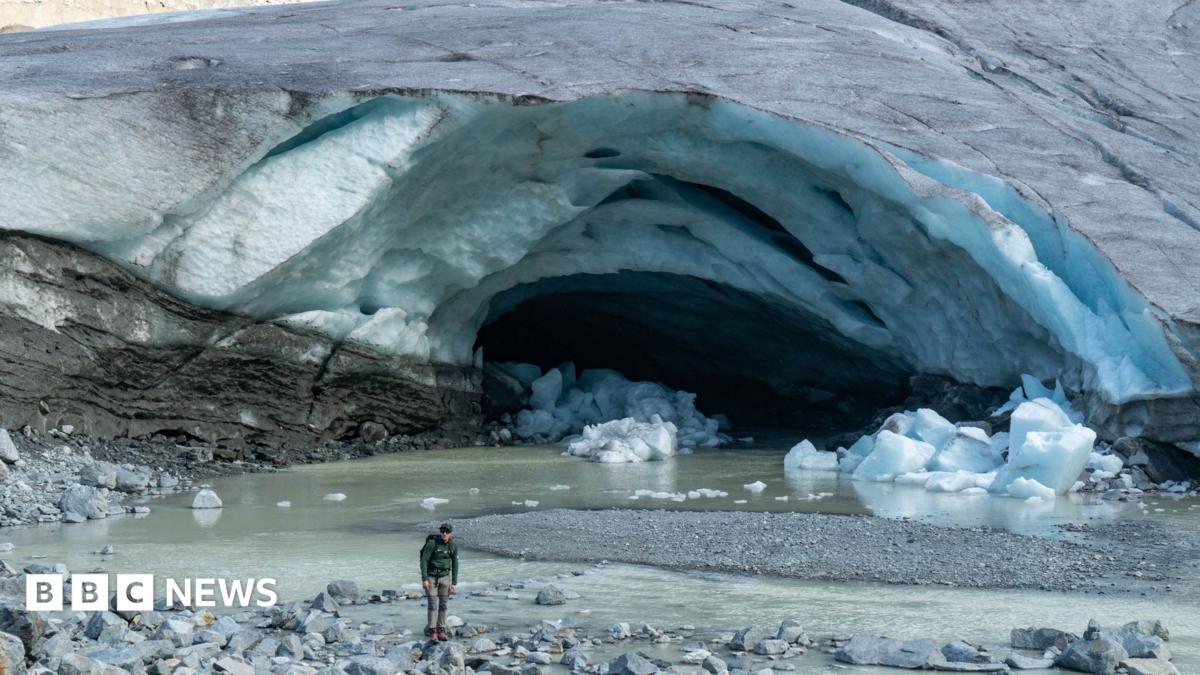
One of the most ominous findings is what researchers observed at measurement sites at the highest elevations, where temperatures are lowest and glaciers are typically snow-covered.
Even as high as 3,500 metres above sea level, scientists found no snow remaining at the end of summer.
“At some glaciers we’ve seen four metres of ice loss at the highest point, where they should be covered by several metres of winter snow at this time of the year,” said Huss, from Glacier Monitoring Switzerland.
Snow is like glacier food – and under stable conditions some of it would eventually compact into ice.
But if no snow survives the summer, it cannot replace the ice lost to melting at lower, warmer elevations. The glacier will starve, shrink and eventually disappear.
“Glaciers are complex because they gain mass at the top and they flow downstream, so there is a lot of physics,” explained Maussion.
“But in its simplest form, what we see right now is that we took an ice cube out of the fridge and it’s just melting in front of our eyes.”
Scientists say the climate is now too warm for many Alpine glaciers to survive.
Some, like Plattalva in eastern Switzerland, have already disappeared.