joinanees5@gmail.com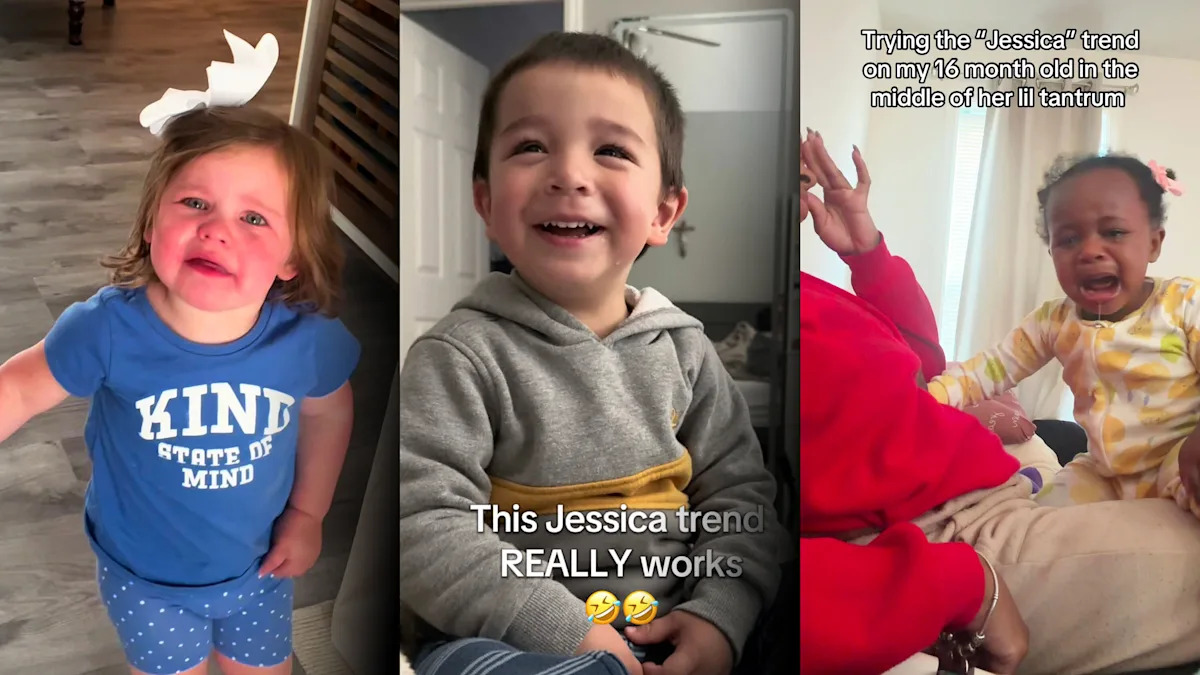
A single word is stopping toddler tantrums in their tracks — and it’s not what you might expect. Video after video on TikTok and Instagram shows children melting down until their parents randomly shout out the name “Jessica.” That brief moment of confusion — “who is Jessica?” — is enough to break the spiral.
In one clip, which has garnered 1.2 million likes, mom Krislyn Kuhn shows her toddler in tears until Kuhn suddenly shouts, “Jessica! Jessica, are you here?” Her daughter, clearly puzzled, stops and looks around for this mysterious person. According to Kuhn, her daughter started playing right afterward, “like no tantrum even happened.”
Mom Gabby Sandoval posted that her son was crying over having to take a nap, so she decided to try the method. He gasped when Sandoval said the name — and then started laughing. “This Jessica trend really works,” she wrote. (No word on whether he actually took that nap.)
Reyhauna, another mom, said that her 16-month-old has been struggling with weaning. Then she tried the “Jessica” hack, and her toddler stopped crying in seconds. One mom commented that just hearing Reyhauna call out “Jessica” in the video made her own 14-month-old stop screaming.
So how does the trick help tame tantrums? And what are the hidden downsides parents may not realize?
How it works
It’s not that there’s something magical about the name Jessica (no offense to the Jessicas of the world) — parents can just as easily shout out, “Fred!” and likely get the same results. Experts say it’s more about the element of surprise.
Psychologist Sarah Lebovitz Suria says the method works because it’s an example of redirection. “When a toddler is in the middle of a meltdown, their brain is completely overwhelmed and they cannot calm themselves down yet,” Suria tells Yahoo. “Shouting a random name like ‘Jessica’ catches them off guard and pulls their attention somewhere new. Their brain stops and thinks, Wait, what just happened?”
Suria explains that a shift in attention is enough to interrupt a spiral, and it works especially well with toddlers, since it’s still easy to get them to focus elsewhere. “They are not yet stuck in their feelings the way older kids or adults can be,” she says. “A good surprise can genuinely reset the moment.”
The drawbacks to consider
Suria says that when used occasionally, the hack is harmless. But over time, “parents may find themselves needing increasingly novel tricks to achieve the same effect, and the child never develops the ability to work through big emotions on their own.”
That’s not the only limitation. Even though it can get kids out of an emotional loop, it’s not an actual calming tool. “It stops the behavior, but it doesn’t teach the child anything about identifying or managing the feeling that triggered the tantrum in the first place,” Suria says.
Pediatrician Madison Szar also believes that a hack is not a substitute for connection. She told Motherly that once the meltdown passes, it’s important for parents to comfort their child, whether that’s offering a hug or validating their feelings, such as saying, “I see that you were upset. I love you.”
But beyond that, some experts also take issue with filming children at their most vulnerable moments and posting these videos online. “Even at 2 or 3 years old, kids are entitled to privacy, and you don’t have a kid’s permission for it,” clinical psychologist Barbara Greenberg tells Yahoo.
Suria agrees. “When a child is dysregulated, what they need is a present, attuned parent, not one stepping back to document the moment. There’s also a real consent issue: A young child has no meaningful say in having their behavior on display publicly — and that content doesn’t disappear.”