joinanees5@gmail.com
Every parent can agree that if you find a magic trick that instantly calms a tantrum, you do not gatekeep it.
So it’s no surprise how quickly the “Jessica” parenting trend has gone viral in recent weeks, and as the mum of a very spirited almost three-year-old, I can confirm it works.
The premise is simple: when your child is in the middle of a tantrum or meltdown, you start yelling out “Jessica” and before you know it, the tears have stopped.
Watch the video above.

Search #jessicatrend on TikTok or Instagram and there are hundreds of videos of parents showing just how quickly it works.
The videos are all the same. First there’s a crying toddler mid-meltdown, and then Mum or Dad starts calling out for Jessica, sometimes taking it a step further and searching for her too.
The change is pretty much instant; the toddler stops crying, and in some cases even starts looking for the mystery Jessica too.
READ MORE: Only one girl name has been in the top charts for 145 years
READ MORE: Why Aussie influencer blurred her son’s face from family photo
READ MORE: Serious health problem hiding in baby twin’s ultrasound

My husband and I – like many other parents across the country – have been struggling with toddler tantrums off the back of Daylight Saving ending last weekend.
So, when it was almost bedtime last night and my toddler went into a full-blown tantrum about nothing, I tested it out.
I yelled out to “Jessica” from the couch a few times, and almost instantly her mood changed and she laughed, asking, “Who was it?”
Safe to say it works.
Now, obviously you should take every parenting tip you see online with a grain of salt, so we reached out to Connected Parenting founder Genevieve Muir to find out why it works and if it’s actually a good way to manage tantrums.
“It works because it interrupts the moment,” Muir explained.
“Your child is overwhelmed and a random word snaps their attention out of it, it’s a bit like saying, ‘Hey, look over there’ to distract someone.
“It might pull them out of the moment briefly but it doesn’t change the underlying feeling. That emotion is still there and often it comes back just as strong or even bigger next time.”
Muir said she gets why parents love it and while it is pretty harmless, it’s not something to rely on as your only tantrum strategy.
“At least some of the time, we need to lean into our kids’ emotions and support them by being present, not trying to distract them out of it. That’s where the real learning happens,” she explained.
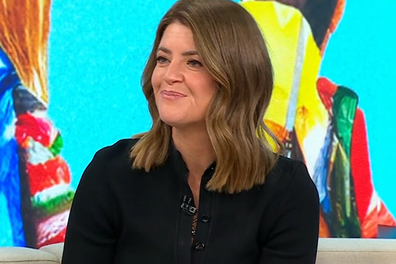
And instead of coming up with a quick fix, like this hack, Muir believes the real question is ‘Why are adults so uncomfortable when our kids are uncomfortable?’
“Why do we feel the need to fix it or stop it or distract them out of it?” she said.
“Big emotions in kids are loud and frustrating. But a lot of the pull towards hacks like this comes from our own story.
“Many of us were not allowed to show emotions like this as children, so there is a really primal instinct to shut it down.”
Muir’s advice to parents is that you need to stay steady in these moments and offer simple support.
“Stay close, hold the boundary if needed, and remember this is a long game,” she said.
For a daily dose of 9honey, subscribe to our newsletter here.

“Emotional development takes time. It takes around 25 to 28 years for the brain to fully mature, so meltdowns are part of the process, not something going wrong.”
She added that meltdowns aren’t something parents necessarily need to fix or solve.
“The biggest thing we can do is let our kids know, ‘I can see you’re having a tough time and I’m here’,” she said.
“If we can do that even some of the time, we teach our kids they can come to us with not just the good feelings but all of their feelings, and that is incredibly powerful long term.”
FOLLOW US ON WHATSAPP HERE: Stay across all the latest in celebrity, lifestyle and opinion via our WhatsApp channel. No comments, no algorithm and nobody can see your private details.